


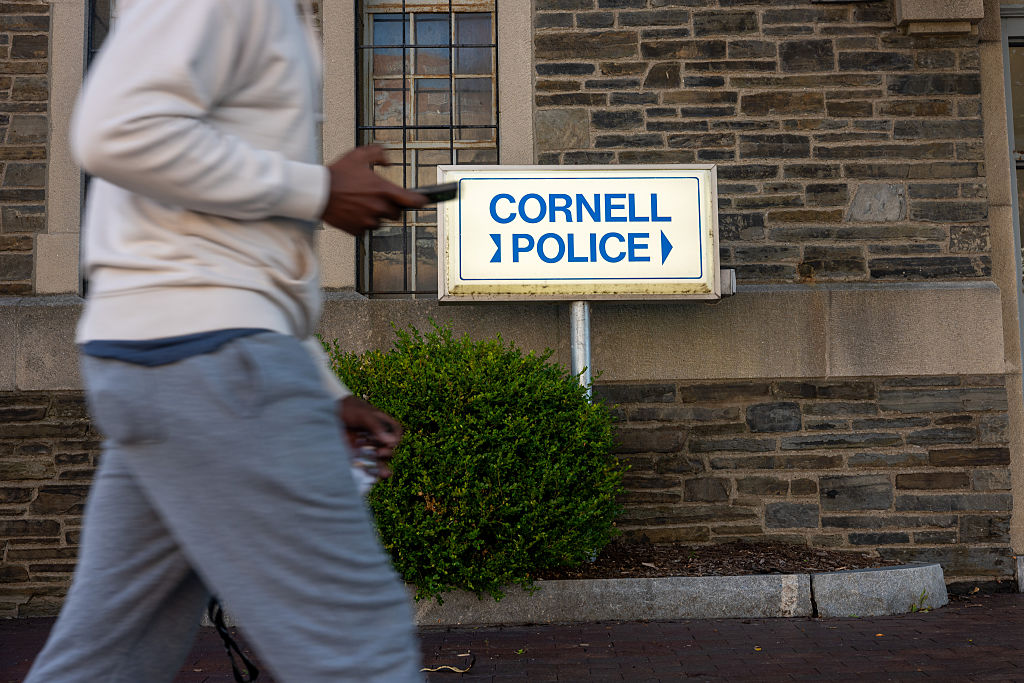
Cornell University is examining its fraternities and sororities after allegations of gang rape prompted concerns about accountability for sexual assault on college campuses.
The university’s President Michael Kotlikoff said on Saturday in a video message to the university community that the school would take “a serious look at the role of fraternities and sororities in campus life” among other steps aimed at creating a safer campus environment.
“At their best, these organizations can provide students with friendship, belonging, mentorship and a powerful sense of community,” Kotlikoff said. “But being part of a group can never diminish individual responsibility.”
Kotlikoff said the university would seek input from students, alumni, and other community members about how to “preserve what is valuable about Greek life while strengthening individual accountability, transparency and a culture in which every member understands their responsibility to protect the safety and well-being of others.”
The message comes on the heels of a civil lawsuit filed last month against Cornell and seven members of the Chi Phi fraternity. The plaintiff, anonymized as “Jane Doe,” alleged she was sexually assaulted and pressured to take drugs and alcohol on the night of Oct. 19, 2024, and that the university failed to protect her and mishandled its response. The lawsuit names seven current and former students as defendants, all of whom have denied any wrongdoing.
The lawsuit has triggered renewed criticism of the handling of the allegations by the university and local authorities, who declined to pursue criminal charges at the time. On Thursday, New York Gov. Kathy Hochul, a Democrat, appointed the state’s Attorney General Letitia James as special prosecutor of the case, citing a loss of confidence in the local prosecutor’s ability to oversee it. New York lawmakers also said they were reviewing the state’s legal definition of consent while voluntarily intoxicated.
Read More: The System That Failed Cornell’s Jane Doe
Kotlikoff was not among the administrators present at a university town hall on Thursday, where students, faculty, and alumni called for stronger action against campus sexual assault. The public meeting was led by the university’s student government. Some students shared their own stories of sexual harassment and assault.
“I am also speaking as Jane Doe,” one student said at the forum.
In a statement last week, Cornell defended its initial handling of the allegations and said it complied with university policies and Title IX. The university banned the Chi Phi fraternity from campus and launched a Title IX investigation in 2025, which resulted in a range of disciplinary measures for the seven members implicated.
“We don’t have all the answers,” Kotlikoff said Saturday. “But we are committed to investigating and finding the answers our community deserves.”
Jane Doe faces threats of doxxing, harm to drop lawsuit
Thomas Giuffra, the attorney representing Doe, told CNN on Sunday that people have threatened to harm her if she does not withdraw her civil lawsuit. Giuffra said there have also been multiple attempts to doxx Doe, which has resulted in at least three other women being mistakenly identified as her.
“She’s received multiple threats, and women who aren’t even Jane Doe have received threats,” Giuffra said. “The threats, the abuse to protect what’s going on, the status quo, these guys are disgusting.”
Ann Olivarius, a civil rights attorney and a plaintiff in the landmark Title IX sexual harassment case Alexander v. Yale (1977), told TIME last week that the backlash against Doe could deter sexual assault survivors from coming forward to make a report.
That backlash has also prompted an outpouring of solidarity, with thousands of people posting #IamJaneDoe on social media. The posts are an effort to counter attempts to doxx Doe, but they have also become a way for survivors to share their own experiences of sexual assault.
Lawsuit raises accountability concerns
The lawsuit has brought scrutiny to the university’s Title IX process, especially over its claim that some of the alleged perpetrators were “afforded the opportunity to mitigate” their disciplinary sentences by writing essays. Cornell said that nobody was allowed to write essays as a sole consequence of their involvement.
After Doe reported the case in November 2024, Cornell conducted a closed proceeding by a three-member panel, which met on Zoom over 12 days in May 2025, the New York Times reported, citing records gathered by Cornell investigators. Individual sanctions and the reasoning behind them had not been publicly disclosed.
According to discipline summaries obtained by the Times, the panel, which enforces federal civil rights at Cornell, did not conclude that Doe was sexually assaulted by all the men accused. Two of the fraternity members were found responsible for sexual assault and expelled. A third, who had graduated at the time of the ruling, was issued a persona non grata order barring him from campus for three years. Two others were suspended, given disciplinary probation, and required to study sexual harassment and write reflection papers. The remaining two, who were accused of being among the men that entered the room after reading a Snapchat message to the Chi Phi group chat encouraging others to join the alleged assault but were not accused of assaulting Doe themselves, were required to write reflection papers and attend trainings on sexual harassment, social media use, and bystander intervention. They were also barred from contacting Doe. None of the men has been criminally charged in connection with the allegations.
Chi Phi’s Cornell chapter was suspended in 2024, and it remains barred from campus.
Doe’s attorney as well as members of the Cornell community and the public have decried what they see as a lack of accountability for the alleged perpetrators. Doe ultimately withdrew from the university amid what the lawsuit described was a lack of institutional support. “With the exception of two of these men, all of them will be able to graduate with a Cornell diploma and live their lives reaping the benefits of this coveted degree,” Giuffra told the Times. “In contrast, as of today, it is doubtful whether Ms. Doe will even graduate college or ever live a normal life due to what these men did to her.”
Some have also described the case as an indictment of Greek life culture. A 2021 study that followed 772 men through their first two years of college found that fraternity membership was associated with subsequent self-reported sexual aggression. Survivor advocates have also argued that fraternity environments can enable sexual assault.
Giuffra told CNN that he has heard from people across the country about their own experiences of campus sexual assault since the lawsuit was filed. “This isn’t just a Cornell problem. This is a college-wide problem,” he said.
Multiple universities, including Cornell, have suspended Greek life activities following sexual assault reports. In November 2022, Cornell temporarily suspended all fraternity parties and social events for the remainder of the fall semester after reports of four drugging incidents and a sexual assault.
Some institutions have also permanently banned fraternal organizations. Swarthmore College banned fraternities and sororities in 2019 after student protests over leaked fraternity documents that contained racist and homophobic language and jokes about sexual assault. The college’s two fraternities had already voted to disband.
Criminal investigation reopened
The case has also drawn scrutiny to the Tompkins County District Attorney’s decision not to prosecute in 2024. The District Attorney, Matthew Van Houten, said last week he would review the case, but defended his initial decision, arguing that Doe’s sworn statement to police did not allege criminality. Under New York state law, if you choose to drink or take drugs to the point of becoming incapacitated, you can still be legally considered able to consent to sex.
Critics have questioned Cornell police’s handling of Doe’s account. Cornell police appeared to have omitted Doe’s explicit assertion that she was raped from her six-page sworn statement, which was shared with prosecutors. Van Houten said his office did not receive the police interview transcript, in which Doe said, “I can say with 100% confidence I was raped.” Campus police later informed the prosecutor’s office of new interviews with witnesses after investigating anonymous tips, but prosecutors declined to review the additional evidence.
On Friday, Hochul criticized prosecutors for relying on an incomplete account, asking: “In what world does the district attorney not even interview her, or anyone else involved, or even request the full transcript?”
“This woman, this young woman, had already endured something that is utterly unspeakable. And then at every turn, she was failed by people and institutions with an obligation to protect her,” Hochul said.
The governor also said she supports proposals to amend the so-called “voluntary intoxication loophole” in New York’s rape law. “If someone is too intoxicated to consent, it should not matter whether they chose to use drugs or alcohol. Voluntary intoxication is not a license for sexual assault or gang rape, period,” she said.
The day before, Hochul appointed James, a Democrat, as special prosecutor.
James had earlier posted on social media that what Doe had endured was “horrific and unacceptable,” raising questions from critics about her impartiality. James, who had already opened a review into Cornell’s response to the allegations, has pledged to conduct an investigation based on fact and the law.
“We will review the facts, gather evidence, interview witnesses and, if warranted, pursue prosecutions,” James said on Friday. “I know that you want answers. I do too. A comprehensive investigation of this nature takes time, but my office is committed to seeing it through.”
President Donald Trump criticized the appointment, calling James a “corrupt person.”
Trump has publicly feuded with James since she brought a civil fraud case against him and his family in 2022. The New York Supreme Court in September 2023 found Trump liable for fraud. An appeals court later upheld the fraud finding but overturned the financial penalty, which had grown to more than $500 million with interest.
James was charged with mortgage fraud by the Justice Department last year, but a judge dismissed the case and two grand juries rejected subsequent attempts to indict her. James denies the allegations.
Both James and Hochul have also criticized Trump over allegations of sexual misconduct and misogyny. In 2016, James, then New York City’s public advocate, condemned Trump’s “disgusting record of sexual misconduct.” In January 2024, months after a civil jury found Trump liable for sexually abusing and defaming E. Jean Carroll, Hochul signed a bill expanding the legal definition of rape to include nonconsensual vaginal, oral, and anal sexual acts. Trump has dropped his challenge to the $5 million damages awarded to Carroll, but continues to contest a separate $83 million defamation award. The Justice Department opened a criminal investigation into Carroll in May over whether she committed perjury.
Asked about the Cornell allegations on Thursday, Trump said he knew little about the case but expressed confidence that the university would respond appropriately. In later social media posts and comments to reporters, however, he cast doubt on whether James would conduct a fair investigation.
“I feel badly for whoever she’s looking at,” Trump told reporters on Friday, “because they won’t get a fair shake.”


