


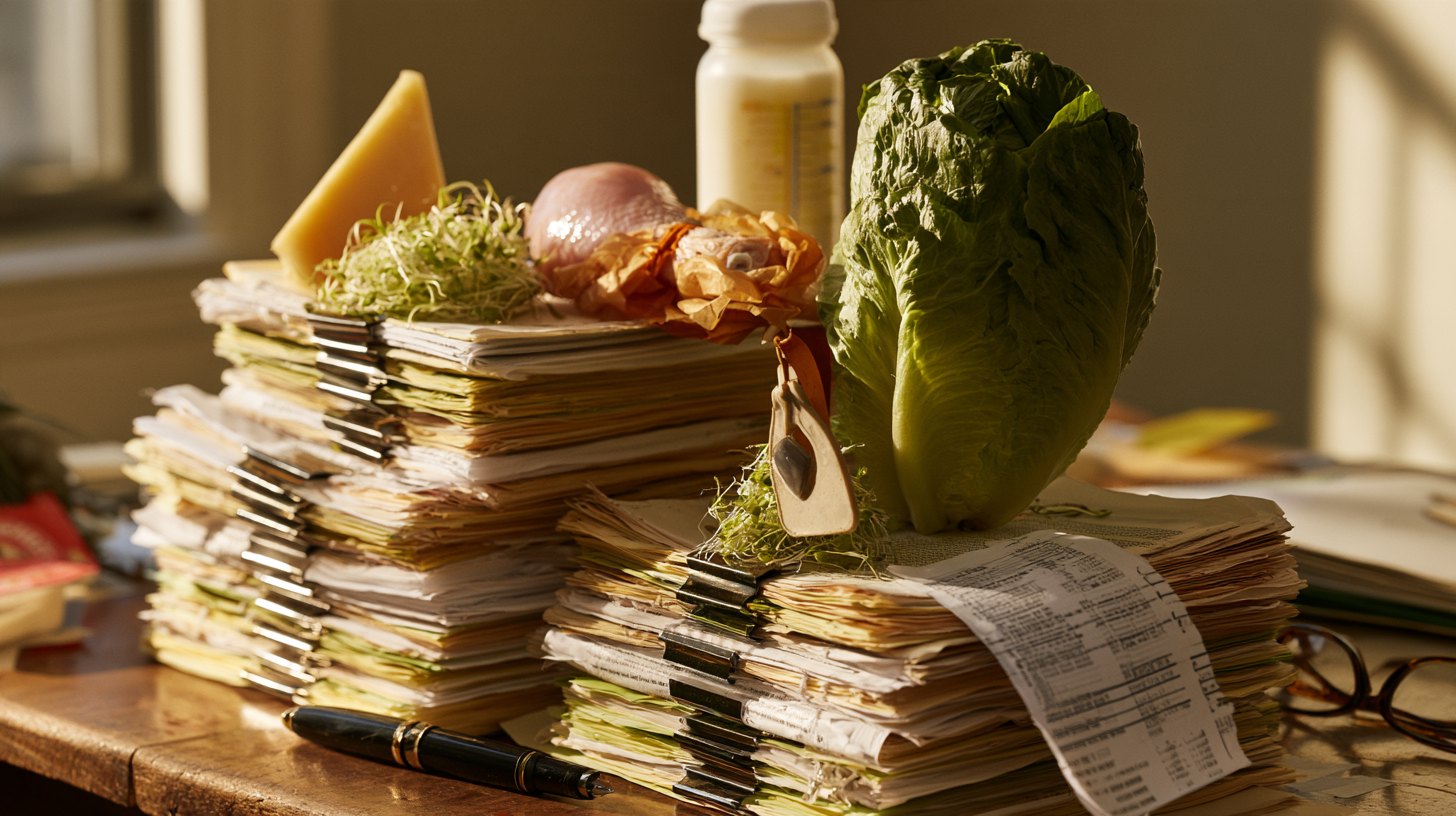
I have spent more than thirty years suing companies after people get sick. This year I have spent a fair amount of time trying to put myself out of business. That means petitions, seven of them, to the FDA and to USDA’s Food Safety and Inspection Service, asking both agencies to do things they either promised to do years ago, already do for some foods but not others, or have said in press releases but never put in writing.
None of this was a solo effort. These petitions were built by my staff and the lawyers at Marler Clark, by the scientists and physicians who read drafts and told me where I was wrong, by the families who lived through these outbreaks and agreed to put their names on the line, and by my food safety friends. And, yes, by my food safety enemies, a few of whom sent the sharpest comments I received. Thank you, all of you. The petitions are better for it, and I will take good edits from anyone.
Here is where things stand.
1. C. botulinum testing in powdered infant formula (FDA)
Federal rules require powdered infant formula makers to test finished product for two organisms, Cronobacter and Salmonella. Since 2023, 52 infants have been hospitalized with botulism in the ByHeart and Nara Organics outbreaks, and the organism was found in a dairy ingredient. It is still not on the list.
This petition asks FDA to add botulinum neurotoxin-producing clostridia to the finished-product testing table at 21 C.F.R. § 106.55(e) and to require testing of the dairy-based ingredients formula is made from. I am filing it with forty-six parents of twenty-four of those infants as Co-Petitioners.
2. A warning label on raw milk cheese (FDA)
Unpasteurized milk cannot be shipped across state lines in a bottle. It can be shipped as cheese, on the strength of a 60-day aging rule written in the 1940s that FDA’s own science says does not reliably kill pathogens, and that may make soft-ripened cheese riskier, not safer. The label says nothing.
The petition asks FDA to require a prescribed warning on cheese made from raw milk, modeled on the juice warning FDA adopted in 1998, to finish the reevaluation of the 60-day aging rule it announced in 2013, and to make cheesemakers who rely on aging validate that it actually works.
3. A warning label on raw and lightly cooked sprouts (FDA)
For twenty-eight years FDA has told children, older adults, pregnant women and people with weakened immune systems not to eat raw sprouts. It has said so in press releases, talk papers, guidance and outbreak web pages, including for the two sprout outbreaks open right now. It has never said so on the package.
This petition asks FDA to put its own advice where people make the decision: a prescribed warning on packaged raw and lightly cooked sprouts, including sprouts sold inside salads, sandwiches and wraps. It is drafted in parallel with the cheese petition, same at-risk groups, same placement and type size, but it will be filed separately.
4. Salmonella as an adulterant in raw ground chicken, ground turkey and chicken parts (FSIS)
In May 2024 FSIS determined that Salmonella at or above 1 CFU/g is an adulterant in breaded stuffed raw chicken products. Its reasoning, that processing puts Salmonella into the meat and contamination rises as poultry is cut and ground, describes chicken parts and ground poultry before any breading touches them. FSIS said it would take up other raw poultry in a later rulemaking. That proceeding was withdrawn in April 2025, and nothing replaced it.
This petition asks FSIS to finish the job. It asks for the same 1 CFU/g determination for raw comminuted chicken and turkey and raw chicken parts, in the alternative for the three serotypes FSIS itself says cause the most illness (Infantis, Enteritidis and Typhimurium), and, at minimum, that FSIS start the verification sampling it announced in 2024 and postponed indefinitely in December 2025.
5. Access and sampling at animal feeding operations implicated in outbreaks (FDA)
In 1975 FDA used its public health authority to reach the source of Salmonella in pet turtles, and that rule has stood for fifty-one years. In 2018, after the Yuma romaine outbreak killed five people, FDA found the outbreak strain in an irrigation canal running past a feedlot holding more than 100,000 head of cattle, collected six samples inside the feedlot, and left.
This petition asks FDA to use the same statute, section 361 of the Public Health Service Act, for a narrow, triggered, time-limited power: when the agency has determined in writing that an animal feeding operation is implicated in a multistate outbreak, it gets to walk onto the property and take environmental and animal samples. No seizures, no husbandry rules, no financial records. Just samples.
6. Naming the firms implicated in outbreaks (FDA)
On September 10, 2026, FDA closed a fourteen-person E. coli O157:H7 investigation, said for the first time that the food was romaine, and named no grower, processor, brand or state. It did the same with an eighty-nine-person romaine outbreak twenty-one months earlier. And this month, FDA and FSIS called the vehicle in an E. coli outbreak that has now sickened fifty people “ready-to-eat multi-ingredient chicken wraps,” and named no one. The public learned the brand from a lawsuit.
FDA has named farms, processors and brands in these circumstances at least eight times since 2006. The authority is there. What is missing is a written standard. This petition asks FDA to amend 21 CFR 20.61 to make clear that the identity of a firm implicated by epidemiologic and traceback or laboratory evidence is not confidential commercial information, and to disclose implicated growers, processors and distributors whether there is a recall.
7. Retail consignee lists in Class I food recalls (FDA)
Since 2008, when meat or poultry is recalled in a Class I recall, USDA publishes the stores that received it. In 2011 Congress told FDA to consider doing the same. FDA agreed in substance and wrote a guidance document. So, if you bought recalled ground beef, you could find out whether your store got it. If you bought recalled cheese, sprouts, cantaloupe or bagged salad, you usually cannot.
This petition asks FDA to publish retail consignee lists, including restaurants, schools, hospitals and other institutions, in every Class I food recall, at the time the recall is announced, and to classify every food recall and publish that classification on a deadline. A “market withdrawal” should not be a way around telling people where the food went.
What I am asking of you
Several of these are still drafts, and I am still editing. If you want to see a draft of any of them to comment on, please email me at bmarler@marlerclark.com and I will send it to you. All comments are due by October 30, 2026.
I am asking everyone to comment now, before I file, while these petitions can still get better. Industry, public health, consumer groups, academics, lawyers on the other side: I want to hear from all of you. Tell me what I got wrong, what I missed and what will not work in the real world. If you disagree, tell me why. Every problem we fix now is one less thing to argue about once the petitions are filed.
Every one of these petitions comes back to the same idea. If the government knows something that would keep people from getting sick, it should test for it, write it down and tell the public. That is not a radical ask. It is the job.


