


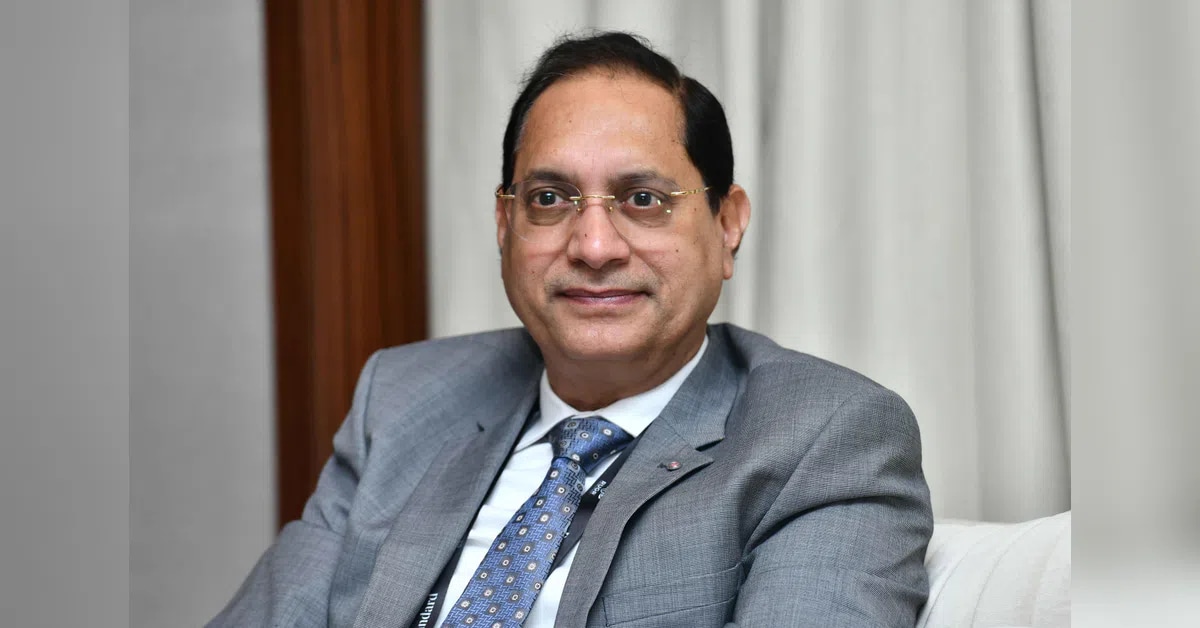
The long-awaited initial public offering (IPO) of National Stock Exchange (NSE) may get approval from the Securities and Exchange Board of India (Sebi) soon, Sebi chairman Tuhin Kanta Pandey said on Thursday.
Speaking on the sidelines of an event celebrating 30 years of NSE Clearing, the chairman said that it was ‘close’ to approving the draft documents.
However, on queries about allowing NSE shares to trade on its own platform under the ‘permitted to trade’ category, Pandey said, “We have not thought about it. It is something we need to assess properly. It may take time. We cannot discuss it at the moment as we have to apply our minds on it.”
Legal experts said that while companies can decide which exchange to list on, approval is required for market infrastructure institutions such as stock exchanges and clearing corporations to list on their own platform.
According to investment bankers, the IPO may come by early next month. While the overall offer size remains unchanged, the State Bank of India (SBI) and its subsidiary SBI Capital are splitting their stake allocations for the upcoming IPO. Bankers said that this change led to additional weeks in the approval process.
NSE’s IPO is estimated to be the largest by size. Last month, the market regulator also agreed to the terms of settlement on applications filed by NSE in collocation and dark fibre matters.
The exchange had filed its draft document with Sebi in June for an offer for sale. The IPO will comprise up to 148.9 million equity shares with a face value of ₹1 each or nearly 6 per cent of NSE’s paid-up capital, with no fresh issue component, meaning the exchange itself will not receive any proceeds from the offering. Instead, all funds raised will go to the selling shareholders.
Sebi chairman added that the regulator was not looking at any changes to the newly-implemented closing auction session.
Addressing the event, Sebi chairman said that the regulator is working on rationalising settlement, margin and risk-management provisions for clearing corporations, while also looking to simplify periodic filings and operational processes.
“We are examining a proposal on margin rationalisation for subsequent buy or sell transactions following acceptance of Early Pay-In (EPI) of securities in the cash segment,” he said.
When investors sell securities held in their demat account, the securities are blocked in favour of the clearing corporation. If the pay-in of securities is done before the settlement date, it is termed Early Pay-in (EPI).
The regulator is also working on a standard operating procedure for operational (SOP) activities related to settlement on unscheduled holidays.
To strengthen market infrastructure institutions (MIIs), the regulator has enhanced governance through greater roles for public interest directors and specialised committees, while placing greater emphasis on conflicts of interest, risk management, compliance, technology and information security.
Pandey said the nature of risks facing financial markets was also changing, requiring regulators to look beyond individual institutions. Technology failures, common exposures and concentration risks could create vulnerabilities across the financial system.
Artificial intelligence would add another dimension, with potential benefits for surveillance, risk analytics and decision-making, alongside risks related to opaque models, data, governance and operations, he added.
“We must move from measuring risk to anticipating risk. We must move from entitylevel risk management to network-level and system-wide risk management. And we must look at financial resilience together with operational resilience,” said Pandey.